 Ribonucleic acid (RNA to its friends, including us)
is a sibling to DNA. You may have noticed from the name that RNA is really just
DNA without the "deoxy". Much of what has been said about DNA applies
to RNA as well. RNA contains genetic instructions, is made up of an alphabet,
can base pair with DNA or other RNA strands. However, there are some crucial differences.
The alphabet is different—instead of T, RNA uses a U (for Uracil). While DNA is
usually found as a double-stranded molecule, RNA is almost always single
stranded. You can think of RNA as a
working copy of the DNA, a copy that is intended to be recycled after use. RNA is disposable, because it's main purpose is to serve as a template for protein machinery and protein machinery is a huge part of biotechnology.
Ribonucleic acid (RNA to its friends, including us)
is a sibling to DNA. You may have noticed from the name that RNA is really just
DNA without the "deoxy". Much of what has been said about DNA applies
to RNA as well. RNA contains genetic instructions, is made up of an alphabet,
can base pair with DNA or other RNA strands. However, there are some crucial differences.
The alphabet is different—instead of T, RNA uses a U (for Uracil). While DNA is
usually found as a double-stranded molecule, RNA is almost always single
stranded. You can think of RNA as a
working copy of the DNA, a copy that is intended to be recycled after use. RNA is disposable, because it's main purpose is to serve as a template for protein machinery and protein machinery is a huge part of biotechnology. 
Setting up Shop: RNA to Proteins
Ribonucleic acid (RNA to its friends, including us)
is a sibling to DNA. You may have noticed from the name that RNA is really just
DNA without the "deoxy". Much of what has been said about DNA applies
to RNA as well. RNA contains genetic instructions, is made up of an alphabet,
can base pair with DNA or other RNA strands. However, there are some crucial differences.
The alphabet is different—instead of T, RNA uses a U (for Uracil). While DNA is
usually found as a double-stranded molecule, RNA is almost always single
stranded. You can think of RNA as a
working copy of the DNA, a copy that is intended to be recycled after use. RNA is disposable, because it's main purpose is to serve as a template for protein machinery and protein machinery is a huge part of biotechnology. 
Where it all begins - DNA
DNA, known to biochemistry geeks and molecular
biologists as Deoxyribonucleic acid.
DNA Stores Information
 This is the information center of the
cell. It contains instructions for the cell that describe how to reproduce, how
to communicate, how to maintain itself, how to eat, how to sleep—put simply,
what the inputs and outputs of the cell should be. The DNA performs the same function in a cell
that blueprints, and managers play
in a factory. Blueprints determine how
the machinery is put together, and managers
decide which machines and hardware to keep in the factory. DNA provides
both functions by determining which proteins are created, and how those proteins
are structured.
This is the information center of the
cell. It contains instructions for the cell that describe how to reproduce, how
to communicate, how to maintain itself, how to eat, how to sleep—put simply,
what the inputs and outputs of the cell should be. The DNA performs the same function in a cell
that blueprints, and managers play
in a factory. Blueprints determine how
the machinery is put together, and managers
decide which machines and hardware to keep in the factory. DNA provides
both functions by determining which proteins are created, and how those proteins
are structured. Cellular Factories
Think of cells as tiny factories—imagine a chocolate
factory—where there are inputs and outputs.
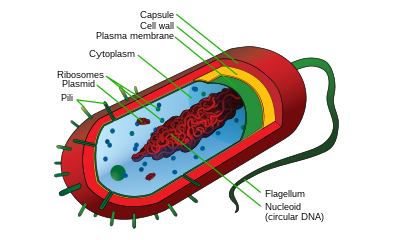 In a chocolate factory, the inputs
are cocoa beans, sugar, milk, maybe some nuts or fruit. Do we need to know the
40,000 character IUPAC name for cocoa to understand this? No! What are the
outputs of a chocolate factory? Sweet, melt-in-your-mouth chocolate bars that
can potentially be added to s'mores, which can then be input to your cells. The
really interesting part of this process (overlooking the delicious chocolate
output, of course) is the process inside the factory that turns raw inputs into
a useful output. A lot of work went on inside the factory to make bitter cocoa
beans into something worth eating. So it is with cells.
In a chocolate factory, the inputs
are cocoa beans, sugar, milk, maybe some nuts or fruit. Do we need to know the
40,000 character IUPAC name for cocoa to understand this? No! What are the
outputs of a chocolate factory? Sweet, melt-in-your-mouth chocolate bars that
can potentially be added to s'mores, which can then be input to your cells. The
really interesting part of this process (overlooking the delicious chocolate
output, of course) is the process inside the factory that turns raw inputs into
a useful output. A lot of work went on inside the factory to make bitter cocoa
beans into something worth eating. So it is with cells.Biotechnology - the Alien World Inside
To understand biotechnology, it's best to start by
understanding the "bio" part before moving on to the
"technology". 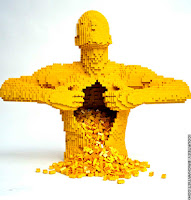

Building Blocks
As diverse as life on earth is, ranging from tiny bacteria to blue whales and aspen clonal colonies, there are simple organizational rules that tie everything together. Life is made up of building blocks that are shared by everything from ancient dinosaurs to paleontologists.Don't Freak Out
We'll discuss what those building blocks are, so that the
"technology" later on will make sense. If you're thinking "I
hated third period biology precisely because I didn't get all that biochemistry
mumbo jumbo!" don't bail on me now.
Subscribe to:
Posts (Atom)